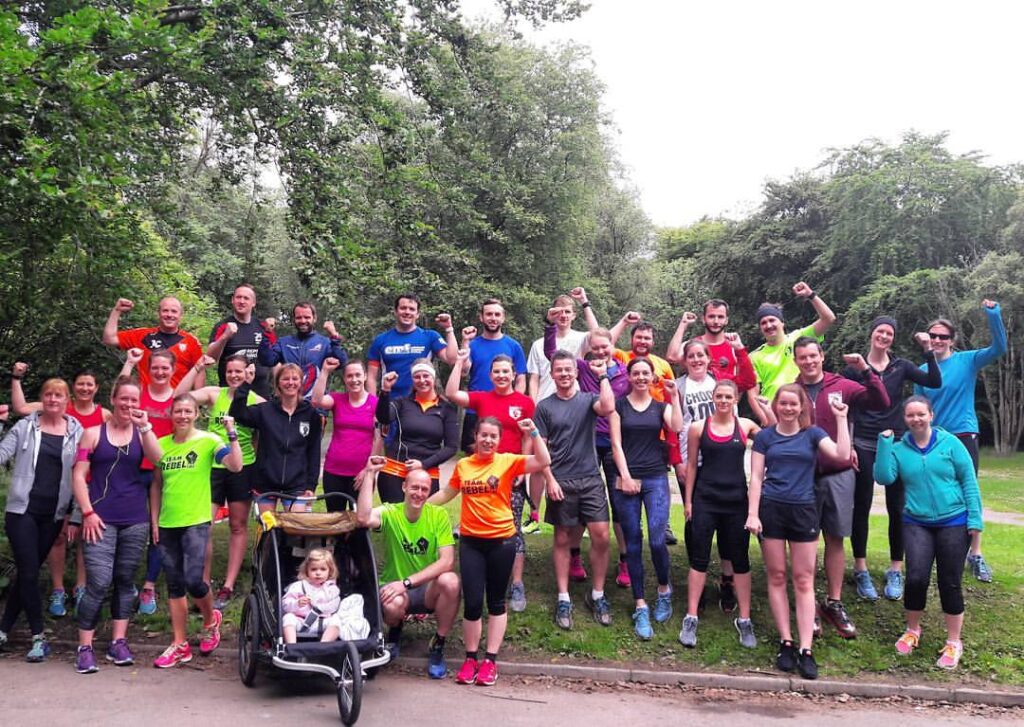
What to expect when running trails
After reflecting on the races I’ve participated in over the past decade with Rebel PT, I’ve concluded that I am more of a trail runner than a road runner.
I’d definitely classify myself as a beginner runner. I often struggle with motivation and battle those twinges of self-doubt about whether I’m even good at running!
However, despite this, trail running always hit differently with me. I was drawn to it because I enjoyed being away from roads, cars, crossings and too many people.
It didn’t feel like I was running because I had to. I wasn’t trying to lose weight, tone up and get fit. I was running somewhere cool and interesting, and that occupied my attention. These are often the same reasons you’d rather walk in the countryside than around the block. It’s therapeutic to be surrounded by nature. There’s an element of body and mind that just isn’t there when I’m running on pavement.
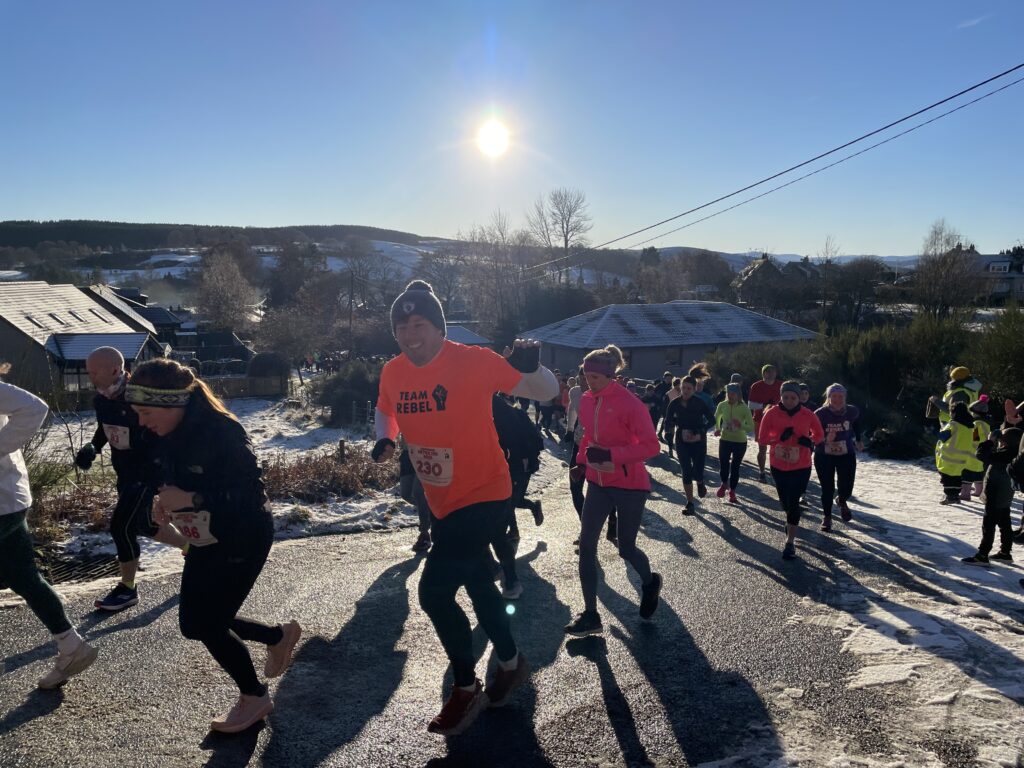
My first two races ever were trail races;
- The Mighty DeerStalker in Perthshire (run by Rat Race Adventures)
A tough 16km of hills, scree, bogs and river crossings in the Borders AT NIGHT! - The second was the Bennachie Hill Race. A tough 15km run up and down Bennachie, taking in 3 different peaks along the way. I couldn’t beat the scenery; at least this one was during the day.
I couldn’t tell you what attracted me to these races at first other than a little bit of naivety, but I’m excited to share what I’ve learned over the past decade and how you can apply those lessons to your own running.
What does Trail running offer that road running doesn’t?
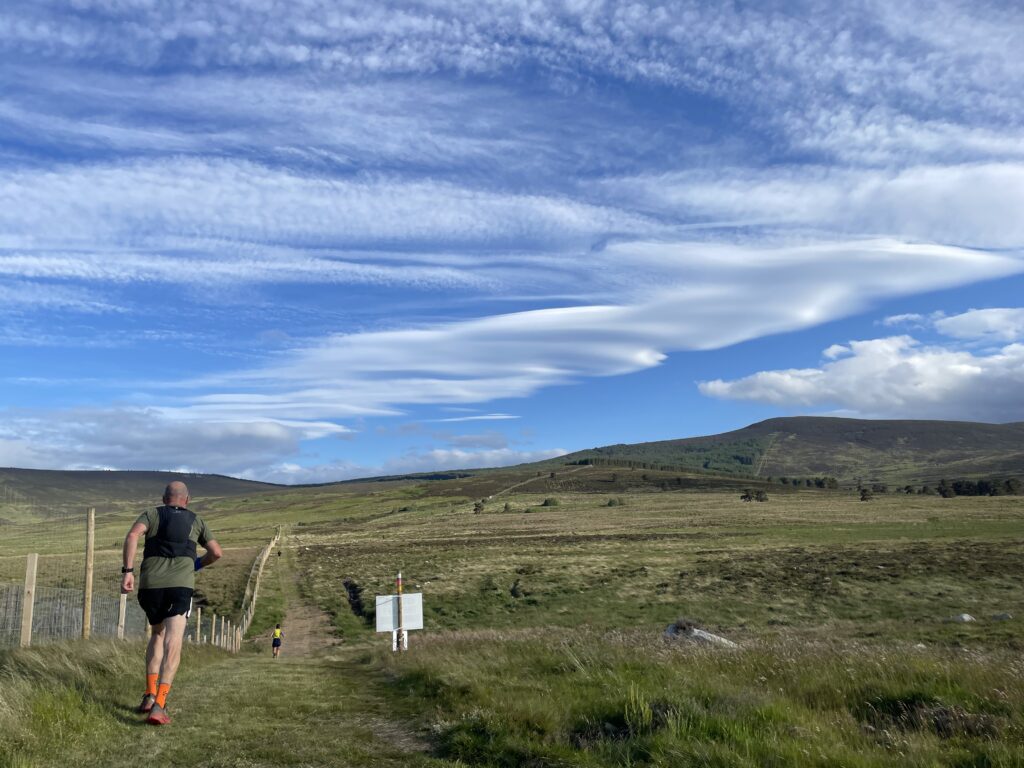
I was chatting to local runner and physio James Cruickshank (PhysioRun) about it, who summed it up well;
Road for sessions, trail for adventure.
If you want to be a scientist, go on roads. If you want to be an artist, go on the trails.
James Cruickshank.
Road running brings consistency and allows for specific targets (distances, speedwork, or pace for distance). Trails can bring excitement, adrenaline, and new experiences.
Trail running offers a unique challenge, the burn in your legs from uphill climbs and the pure joy of racing downhill.
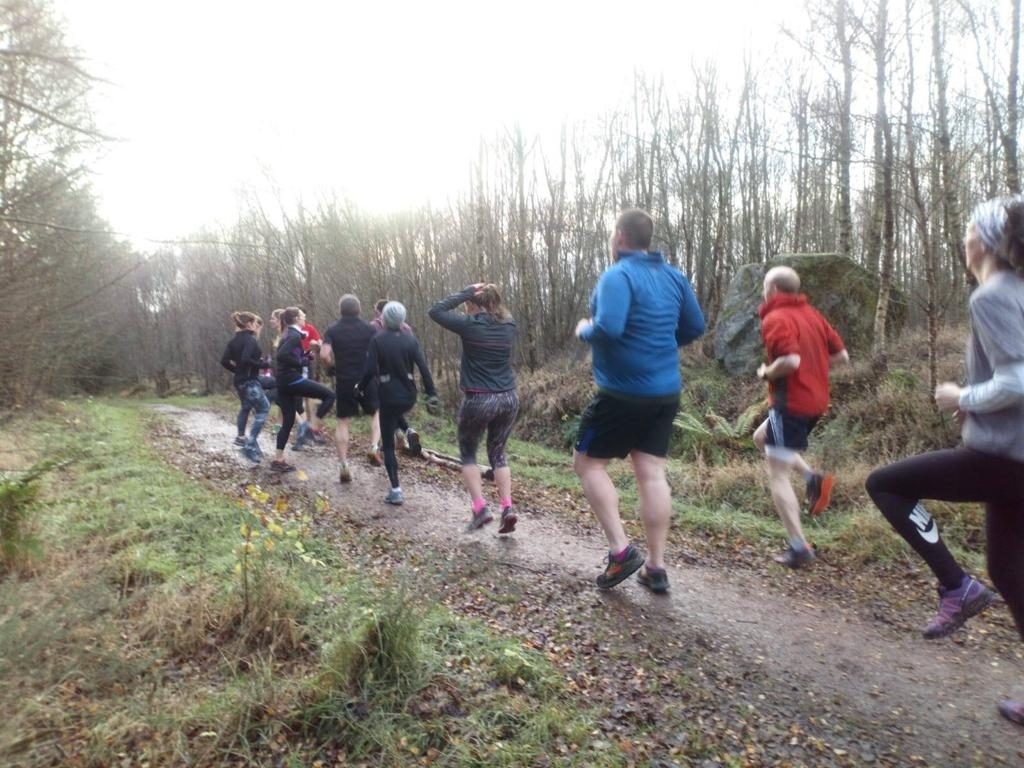
How to prepare for a trail race
If you want to get out and race, you’ll want to prepare before you rock up at the start line.
Road racing doesn’t transition into trail running as easily as you’d think. You may find that your usual five and 10k run race times are slower out on the trails. The winding paths, steep incline, fast decline, and the technicality of the foot placement all lead to a much more challenging race.

How to practice
Scotland has an abundance of local hills and woods, providing ample opportunity to play outdoors.
Take advantage of the beautiful scenery and enjoy exploring these natural playgrounds for a chance to push your running in a different direction.
Practice in a familiar environment
If you are training for a specific race, try to replicate as much of the course as you can in your training.
Hills?
If the trail race you want to participate in is hillier than your usual running route, do each hill twice or look for a route with more hills near you.
Muddy and Rocky?
If it looks muddier or rockier than what you’re used to, find some patches and more technical ground to practise on and run over them a few times a week to train well for your first 10K race.
Start Slow and listen to the body
When starting out, you don’t want to get carried away. You want to listen to your body. It’s easy to think you need to get out and run lots, but if you’re not careful, going from too little to too much will cause you an injury.
Often the best way to start is just time on the feet; you may even want to walk the routes first so you know what you’re letting yourself in for. Start with smaller loops, routes, and hills. Build it up over time, slowly increasing the distance and the inclines.
When you start to run, be prepared to power walk the uphill and take care on the downhill. It does have a technique to it before you start to feel comfortable.
One of the best bits of advice I got was before Bennachie Hill Race;
You might feel like a hero when overtaking uphill runners, but brace yourself for the embarrassment of getting smoked by them on the downhill. Don’t let the downhill destroy your ego!
Remember to start slow and gradually increase your speed and intensity as you gain confidence and experience. Running trails can be a challenging but rewarding part of your running routine, and with consistent training, you can improve your running ability on and off the trails.
My favourite part: How to run downhill
Start slow and gradually increase your speed as you gain confidence and experience. Running downhill can be a fun and exhilarating part of your running routine, but it’s important to do it safely.
Lean ever so slightly forwards. Downhill tends to feel more like falling with grace than pounding the pavement.
Try to take smaller strides to land on the ball/mid part of your foot. This is important for keeping control and reducing impact.
You can slow yourself down by leaning back, but this puts more force through your joints.
Try not to spend the whole time looking at your feet. Yes, foot placement is important, but you also want to look a few steps ahead and at the terrain before you.
Use your arms. This is important with balance, and you want to feel more like you’re floating down instead of falling with no control. I tend to look like I’m flapping a little. Arms out to the side and flow with each step and bounce downhill.
Watch your pace. This is from experience after running the Illuminator. It’s easy to get ahead of yourself and enjoy the speed on the downhills, but reserve some of that energy for the rest of the race. I got carried away and expended too much energy, which meant I struggled in the race’s second half.
What gear should I wear for trail running?
As with most times you decide to go out and run, you want to be dressed appropriately for the weather and terrain.
Remember to consider and pack for your hydration and food needs, especially if you are out for a long time.
Wear breathable clothing that you’ll feel comfortable in, along with considering being in any exposed areas or changes in weather. This could mean waterproofs and windbreakers for any runs that take you high up in the hills.
Appropriate shoes: You’ll most likely want to wear trail shoes. These will give you more cushioning to reduce the impact from the downhill and more grip for holding onto that loose turf and mud.
How to pick the right trail running shoe
There are so many different types of running shoes that it can be overwhelming. It’s also difficult to recommend what shoe is right for you, but there are a few things to take into consideration;
What type of conditions you’re going to be running in?
Are you looking at hardy trails with varying slope gradients and underfoot conditions?
Then you may be looking for a more rugged sort of trail shoe. One with plenty of traction underneath and a good grip. They can handle most terrain; they’ll be sturdier and slightly heavier. These would probably be good for a winter boot camp or tough trails giving you more confidence in your step on difficult courses.
Are you running more on fire trails and paths in forests?
In this case, you could probably benefit from a lighter, more “normal” type of running shoe. They will be lighter and more breathable, with less emphasis on the grip. Best suited to smoother and faster trails, compared to muddy, slow, rocky trails (although they can handle those types of trails as well, you may find they don’t last as long or give you the same confidence in your grip.
The last thing to consider would be cushioning. A whole load of companies create shoes based on extreme cushioning to no cushioning. If you’re new to running, your body might not be used to the pounding it can take from a daily run, so you may want to look for something with a little bigger profile. This absorbs impacts, especially on the downhill and can be more gentle on the body.
Trail training is going to test your body
The hills are going to test your legs and your lungs. You want to split your training to have a mixture of intensity and casual running. Take large deep breaths on the way up and try to follow a steady breathing pattern.
Running Heart Rate
It’s going to feel like your heart is beating out your chest. Measuring your heart rate can effectively monitor your workout intensity and ensure that you are training at the appropriate level. Training smart is always better than training hard. There are 5 different heart rate zones you can train in that affect intensity—these range from very light to your absolute max. You work out these zones based on % of your maximum heart rate.
The heart rate zones

A very basic way (and not super reliable) way to measure your maximum heart rate is 220- your age. This will give you a very rough idea of your maximal output. You can then work out what zone your training is based on this.
Training in Zone 1 is often the warm-up phase of training. You shouldn’t be putting much stress on your body. This could be a 10-15 minute warm-up or a prolonged recovery run after an intense training day.
Zone 2 is a slight step up from Zone 1. It should still feel comfortable. A good test of this is that you should be able to chat with a friend and converse with someone running beside you. This is a zone you can also sustain for hours at a time. It is predominantly used for long runs and base training sessions as it works your aerobic energy system. Most of your runs should be in this category.
Zone 3 is slightly more taxing, your body will start to hurt as the lactic acid builds up, and you’ll struggle to maintain that pace for much longer than 30 minutes to an hour. This could include tempo running at 3 x 15-minute intervals with a short recovery run in between.
Zone 4 starts to become much more uncomfortable. You are working on running efficiency and tolerance of moving at a harder pace for a more extended period of time. You’ll probably be running fast 1 km with a recovery time of 3-4 minutes in between.
Zone 5 will be where you are running at your absolute max effort. This will primarily be your sprint training.

Grab your friends to help you train.
I always recommend bringing a friend along to enjoy getting out and exploring the trails.
If you struggle to motivate yourself to get out, it’s great accountability and encouragement. If I’ve lost my mojo a little bit, I’ll always drop a message to a friend and see if they want to go out for a run.
Going out for a social run is much more enjoyable than running alone. I find it much easier to pace myself. It’s true when they say you can’t talk and run simultaneously, which helps me slow it down to a much nicer speed. Plus, there’s nothing quite like that competitive last 500m sprint to get the heart rate up to push yourself ;)
Try not to worry if the 10K+ takes you longer than you expect on the day don’t worry, as the adrenaline and the joy of the race will carry you to the finish line with no problems.
We hope you are excited about getting stuck into or ramping up your trail running, and our tips above helped.
Training for a trail race, marathon run, or 10K requires training and preparation.
While road running offers consistency and specific targets, trail running brings excitement, adventure, and unique challenges. To prepare for a trail race, it is important to practice in a familiar environment, gradually increase distance and incline, and listen to your body to avoid injuries. Running downhill requires proper technique and control, including leaning slightly forward, taking smaller strides, using your arms for balance, and maintaining a steady pace. Wearing appropriate gear, including breathable clothing and trail running shoes, is essential for comfort and safety. Training on the trails involves a mix of intensity and casual running, with attention to heart rate as an indicator of overall fitness. Additionally, involving friends in your training can provide support and motivation. Remember, even if the race takes longer than expected, the adrenaline and race-day excitement will carry you to the finish line. Embrace the joy and sense of accomplishment of trail racing and enjoy its unique experiences.
Come and say hello at a Rebel PT session.
At Rebel PT, we include running as part of our Rebel PT Bootcamps in Aberdeen and Edinburgh for people at all fitness levels, and we always take part in outdoor fitness events, adventures and trail runs across Scotland as a team – if you’d like to join our adventurous community, check out our free trials here.