
What is Foam Rolling?
Often known as a poor man’s massage and often associated with being very uncomfortable! Foam rolling involves applying pressure with a foam roller (or alternative) to specific parts of your body to help with muscle performance and recovery. Alternatives could be a water bottle, tennis ball, lacrosse ball, or foam roller.
Muscle tightness is usually caused by moving in a receptive way. Running and strength training as an example. It doesn’t always have to involve moving as sitting (especially working from home) can cause tension in the body.
How to foam roll
So the key is to not just flop onto that roller or ball like a dead weight. It is better to be too soft than too hard. It might feel tender as you roll through the tissue but it should not be agonizing.
I like to divide the muscle that I’m rolling into three segments. Top, middle and bottom.
I give each segment a slow roll up and down. Usually no more than a couple of inches of tissue in each section before moving onto the next part of the muscle.
I spend roughly 30-60s doing this depending on how the muscle feels.
Normally I’ll finish off by finding a tender spot on the muscle and then moving the joint through a range of motion (example: flexing and extending your ankle while your calf is pressed against a roller) instead of just rubbing a muscle to death. Both play a part but no need to get carried away a little can go a long way.
People often think they need a whole half-hour for rolling. If you can spend five or 10 minutes before and after workouts(or morning and evening), that would be ideal. One to two minutes for each muscle group. You’ll find it much easier to keep up that way too.
You only go to the dentist once a year, but you brush your teeth every day.
4 muscles you should be foam rolling
1. Quad Muscle

How to:
Lie facedown on the floor. Place a foam roller perpendicular to your legs, with your right upper thigh resting on the roller and the left leg bent at the hip and knee, resting lightly on the ground to your left.
You should be balancing on your forearms with your core engaged. Begin by rolling roughly two inches forwards and then two inches back. Work your way down the whole quad.
After completing that you may find that a specific spot felt more tender than the rest.
While holding the roller still, slowly bring your right heel towards your glute and then lower it to the ground. Repeat two to three times.
Then switch legs
2. Calf Muscle
How to:
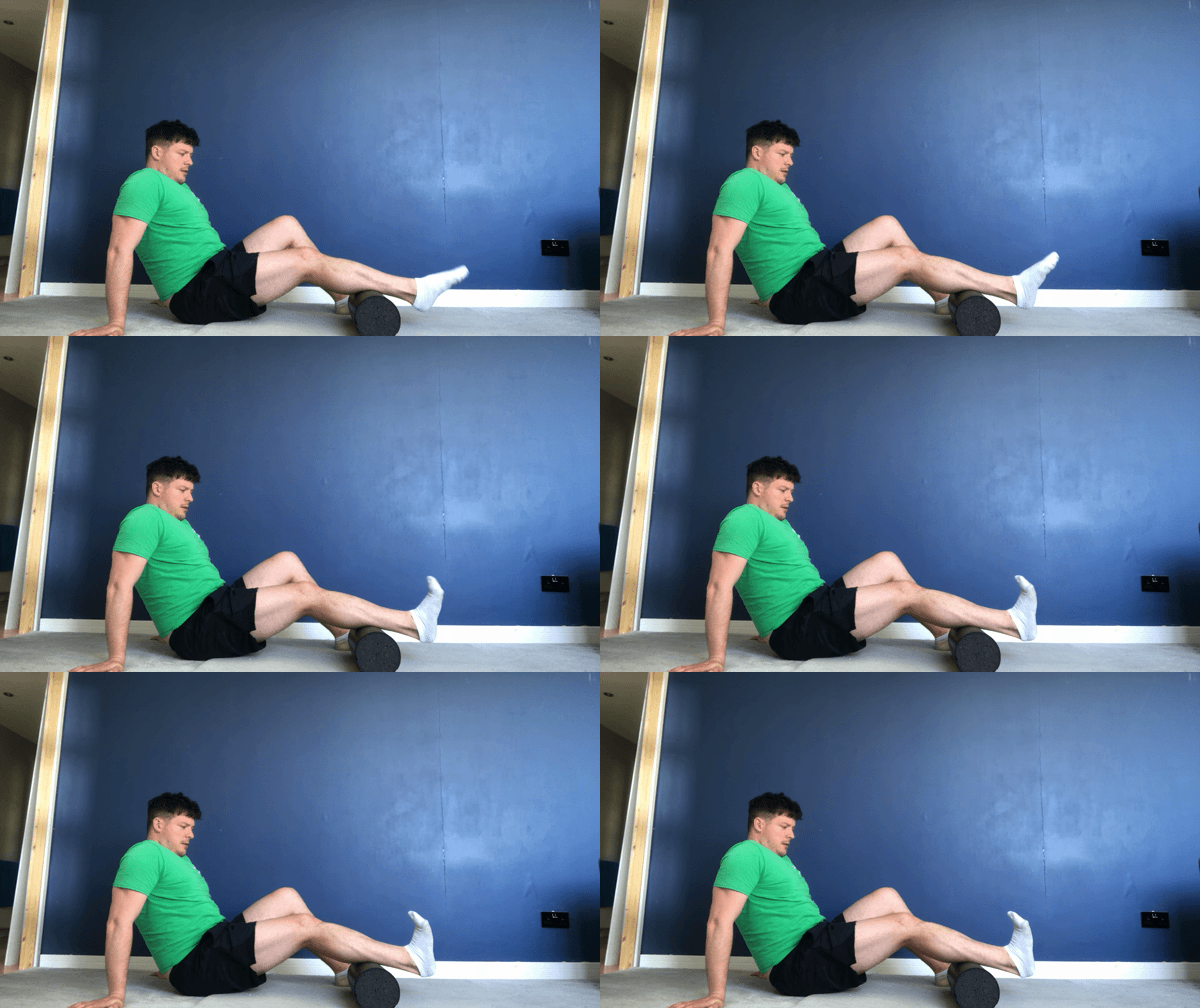
Sit on the floor with your left leg resting on the foam roller.
Support yourself by placing your hands on the mat slightly behind you. Shift some of your weight from your resting right leg so you have some pressure on your left calf and roll yourself forward one or two working your way up and down the full calf.
After working through the calf
Slowly move the foam back to a position that felt uncomfortable.
When you find a tight spot,
Flex and extend your ankle like your pushing down on the accelerator of a car.
3. Lateral Calf Muscle (Peroneal Group)
How to:
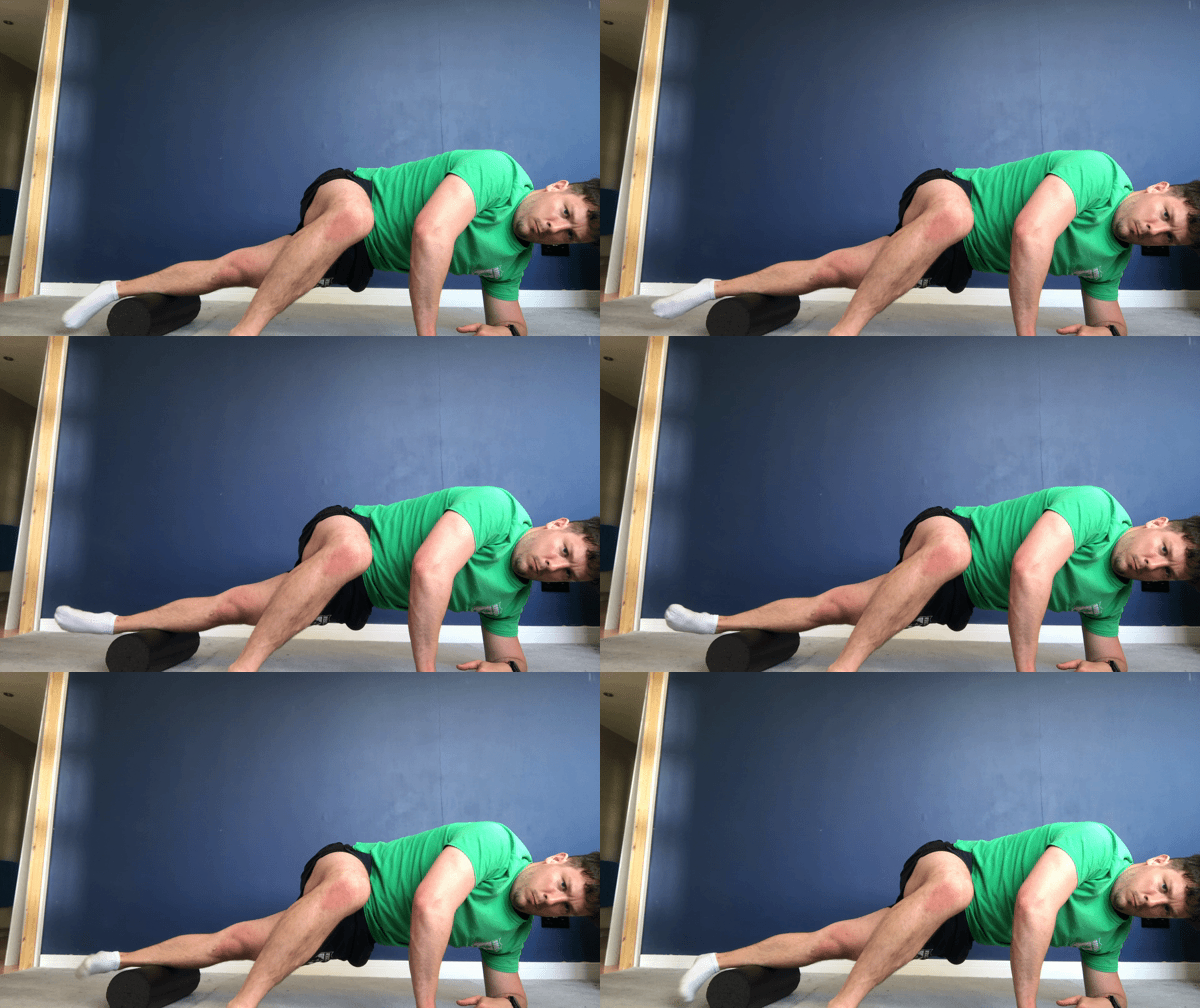
Similar to your calf above but this time lie more on your side.
Place the foam roller perpendicular to your right leg,
Roll up and down roughly 2 inches at a time nice and slowly. Putting a little more attention on parts that are more uncomfortable. Your moving from just below the knee to just above the ankle / Achilles.
As above when finished find a tender spot. Apply a little more and rotae your ankle joint in a circle.
Switch side
4. Glute Muscle
How to:
This one works best with a lacrosse or tennis ball but not essential.
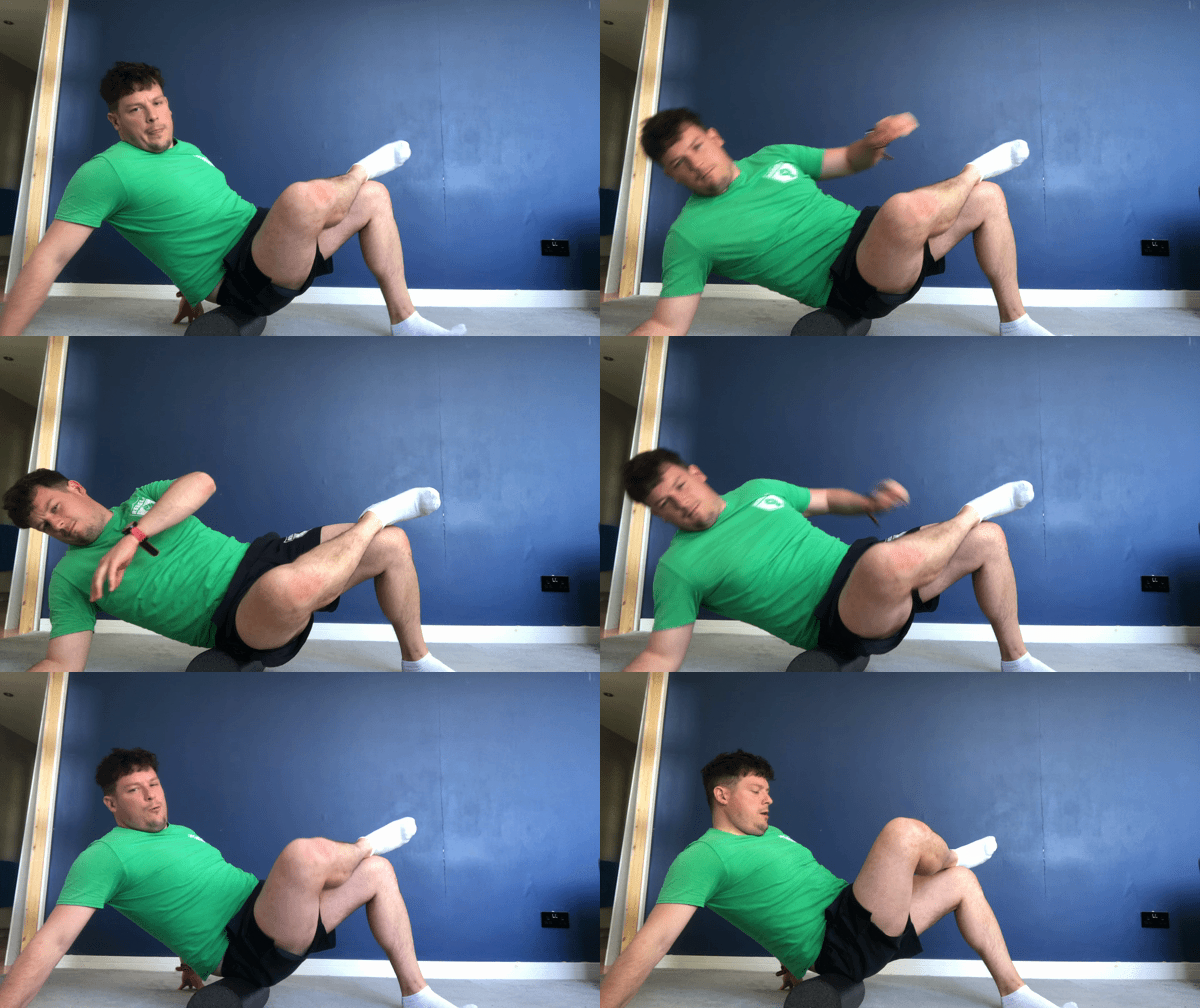
Sit on the floor and place the foam roller or ball under your right glute. Legs should be bent and your left foot should be resting lightly on the ground.
Your hands should be placed on the floor behind you
Start by rolling the massage ball in small circles under you, then reverse directions.
When you find a tight area, put more of your bodyweight on the ball. Pulse up and down for a few seconds, alternating between more and less pressure.
To ease tension even more, bring your right knee out to the side and lift up your leg. Bring it back into the regular position.